
Over the past decade (FY2015 – FY2024), Bridges Middle School has demonstrated consistent, mission-driven financial stewardship. A recent review of ten years of IRS Form 990 data — supplemented by recent draft financials — shows a stable operating model that prioritizes student learning, access, and long-term sustainability.
In other words, Bridges has remained financially strong while staying true to its core purpose: supporting students, families, and learning. The review of the financial data shows a stable, thoughtful approach to budgeting — one that prioritizes teaching, learning, and access while planning responsibly for the future.
How Bridges Uses Its Resources
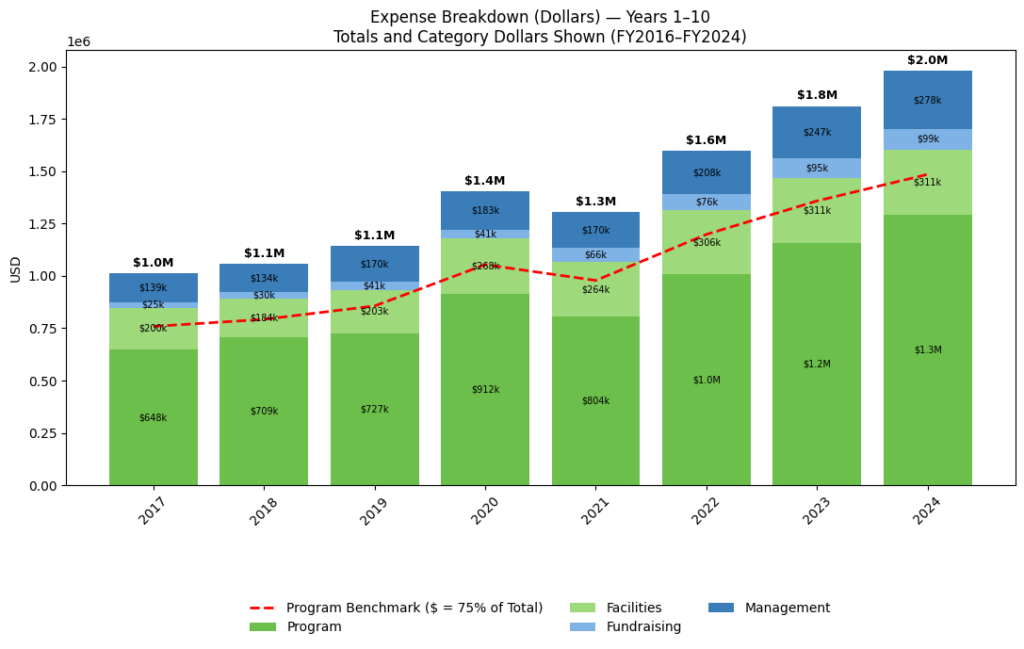
At Bridges, financial decisions are guided by a simple question: How does this support our students?
Instructional costs and school facilities are both treated as part of the educational program because classrooms, learning spaces, and faculty are all essential to student success.
The data show that over the past 10 years, approximately 80% of Bridges’ total spending has gone directly to program expenses, including teaching and learning environments. This places Bridges at the upper end of what is considered healthy and mission-focused for independent schools, meaning we consistently prioritize students over overhead.
Administrative costs, such as school leadership, finance, and fundraising, have remained stable over time and have not grown faster than the school itself.
Where Bridges’ Funding Comes From
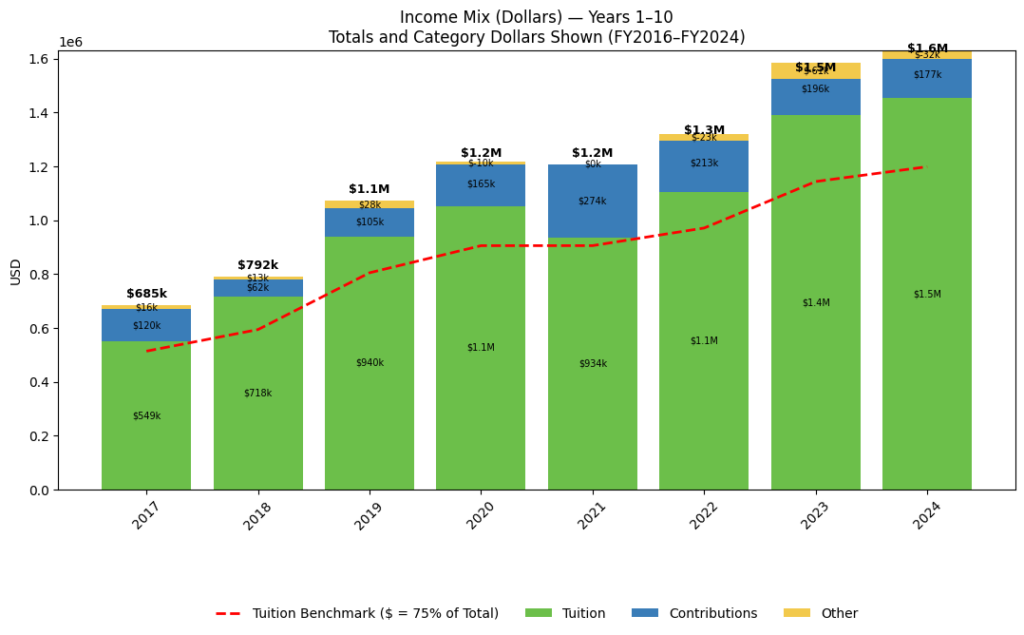
Like most independent schools, Bridges relies primarily on tuition to support day-to-day operations.
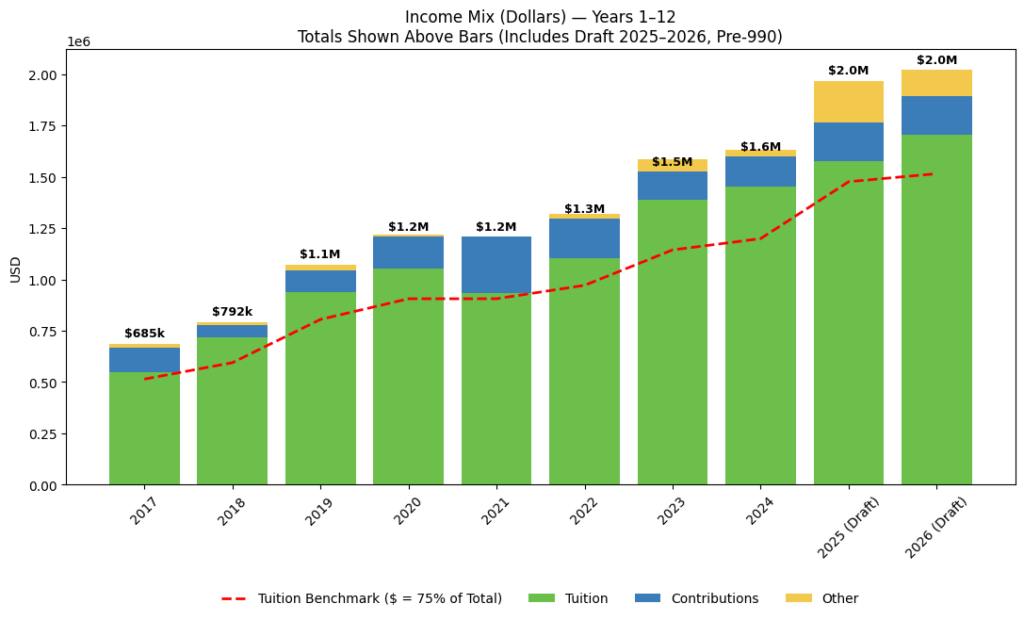
This chart shows:
- Tuition provides about 80-90% of total operating revenue, reflecting a predictable, enrollment-based model.
- Annual giving and contributions make up about 10-15% of revenue and naturally vary year to year.
- Other sources of income remain minimal, so the school doesn’t rely on unpredictable funding.
During the COVID years, enrollment remained relatively stable even as donations fluctuated more widely — a pattern seen across many private schools nationwide. In recent years, tuition growth has supported continued investment in programs and staffing.
A Long-Term Commitment to Access and Affordability
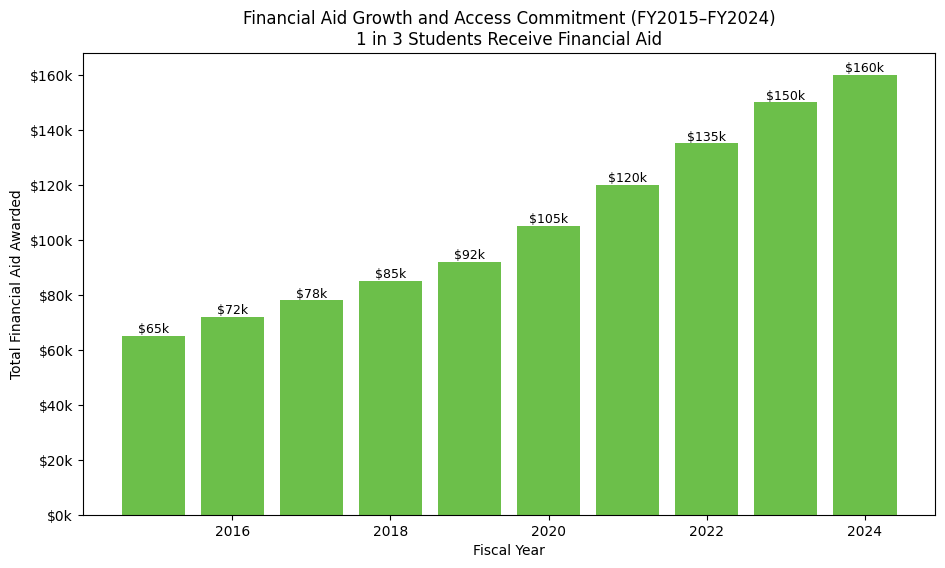
One of the clearest ways Bridges lives its values is through financial aid. This chart shows that over the past decade, Bridges has intentionally maintained financial aid at 10-12% of tuition revenue, growing aid from $65,000 in 2015 to $160,000 in 2024, and exceeding $200,000 in the 2025-26 school year.
Today, about one in three Bridges families receives financial aid. This growth reflects careful planning over many years and ensures that Bridges remains accessible to families from a wide range of financial backgrounds.
How Bridges Compares to Healthy School Benchmarks
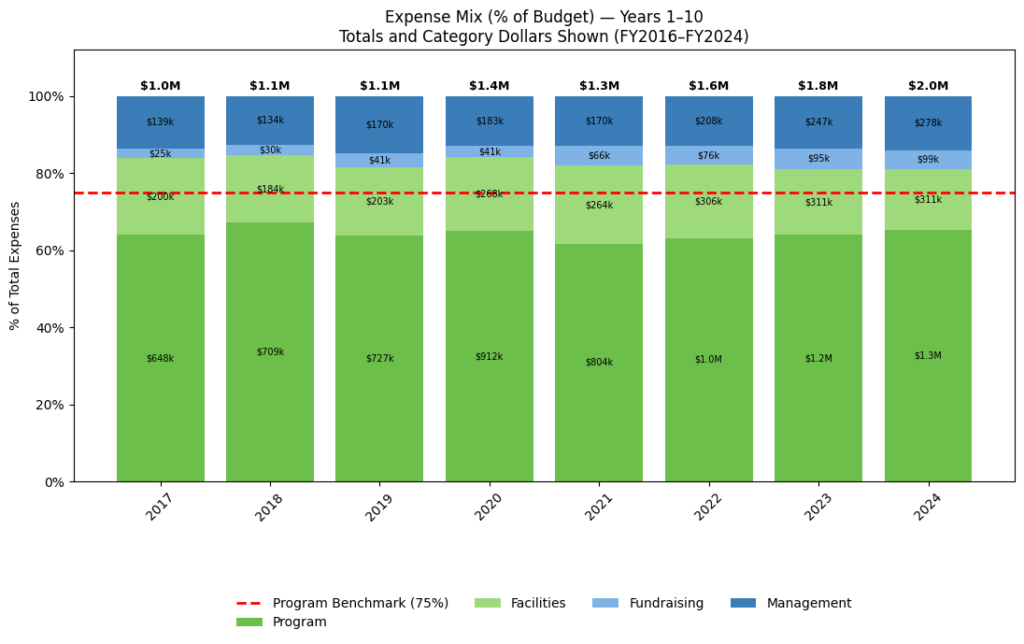
You may see references to “benchmarks” in financial discussions. Benchmarks are simply guideposts — they help schools understand whether their financial patterns look healthy compared to similar schools.
As shown in the chart above, many independent schools aim to spend 70-75% of their budgets on educational programs. Bridges has consistently spent near or above that range, indicating a strong focus on students and learning rather than administrative overhead.
This does not suggest overspending. Instead, it reflects intentional prioritization of classrooms, faculty, and learning environments.
Looking Ahead
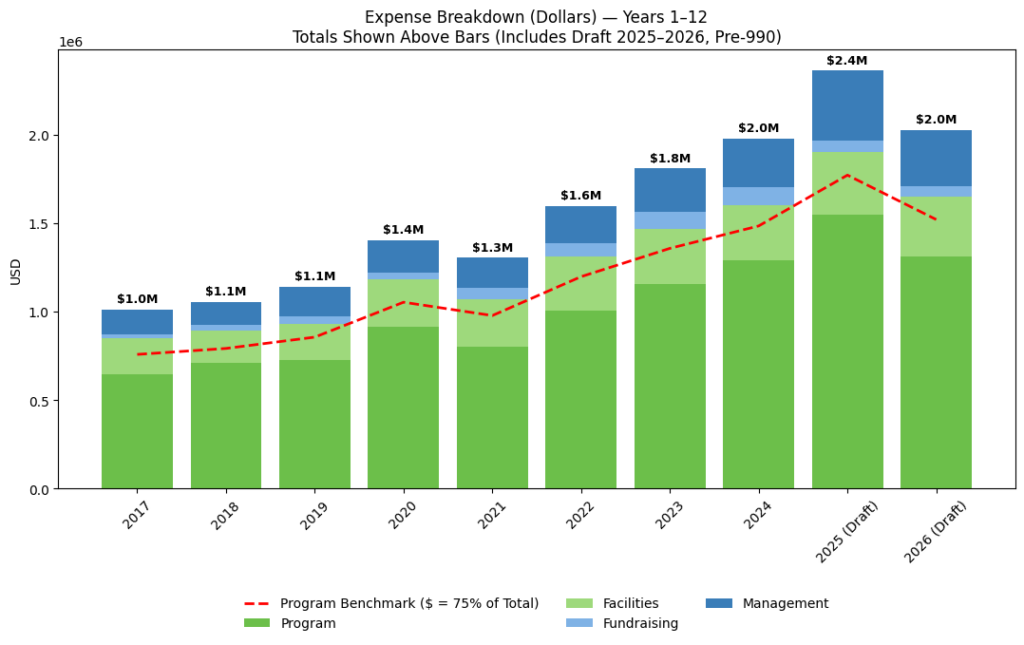
Preliminary financial planning for the next two years suggests that Bridges is well-positioned to:
- Maintain strong academic programs
- Continue supporting families through financial assistance
- Plan responsibly for future growth
Why this Matters
Taken together, these charts and the review of the last ten years of financial data tell a consistent story:
- Bridges invests primarily in students and learning
- Administrative costs remain stable and controlled
- Financial aid continues to support access and affordability
- The school is planning for the future with care and transparency
For families, this means confidence that Bridges is not only educationally strong, but also financially responsible, mission-driven, and focused on what matters most: our students.