
If you’re a fan of the Real Talk, Whole Life podcast, you may have recognized a familiar voice — our Executive Director, Beven Byrnes, who was recently featured on the show.
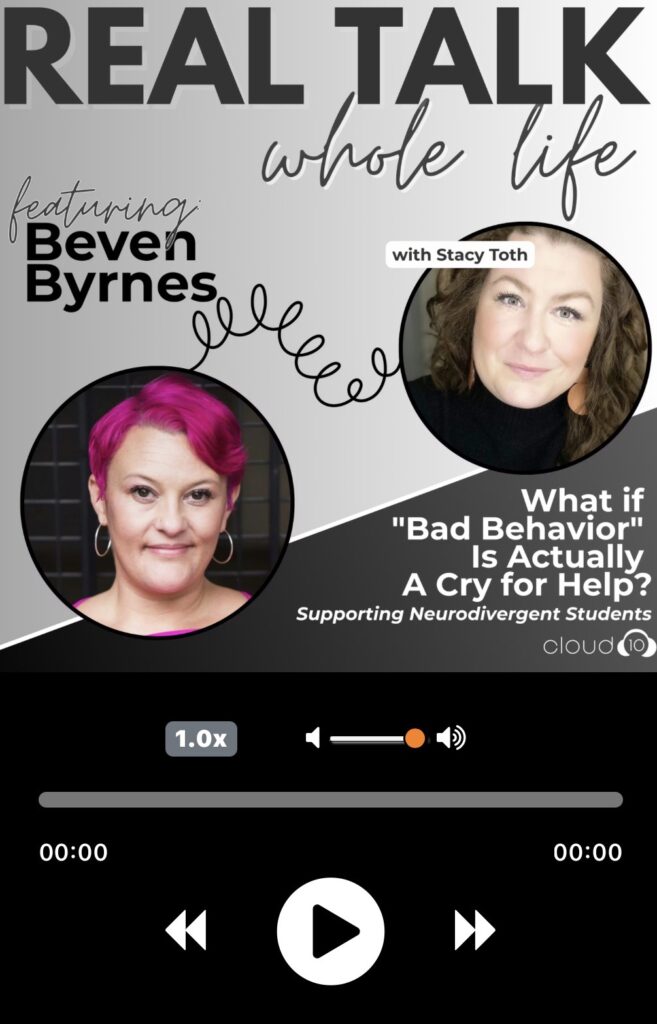
In the episode, What if “Bad Behavior” Is Actually A Cry for Help?, Beven joins host Stacy for a conversation about how we understand student behavior — especially for neurodivergent learners — and what may be overlooked in traditional school settings.
The discussion reflects challenges many families and educators are seeing firsthand. In the wake of the pandemic, students are navigating increased social and emotional complexity, alongside a rise in diagnoses such as ADHD, autism, and other learning differences. It invites a shift in perspective: what if the behaviors we often label as “difficult” are actually forms of communication?
Beven shares insights into how masking, stress, and past experiences can shape behavior, and why a one-size-fits-all approach to education often falls short. Rather than focusing solely on correcting behavior, the conversation emphasizes the importance of curiosity — seeking to understand what a student may be trying to express and what support they need to succeed.
This perspective is central to our work at Bridges Middle School. We believe students do well when they are understood, and that meaningful learning happens in environments that recognize and respond to individual differences.
For families looking to deepen their understanding or strengthen their partnerships with schools, the episode also offers practical considerations around advocacy and communication.
You can listen to What if “Bad Behavior” Is Actually A Cry for Help? on your preferred platform: