Technology can remove barriers for neurodivergent students, giving them new ways to read, communicate, organize their thoughts, and demonstrate what they know. But when does helpful support begin doing the very work a student is supposed to be learning to do?
Our Executive Director, Beven Byrnes, explores that question in a new article for TechFinitive, “Where assistive technology ends and dependency begins.”
Beven draws an important distinction between technology that helps a student access learning and technology that replaces a skill the student needs to develop.
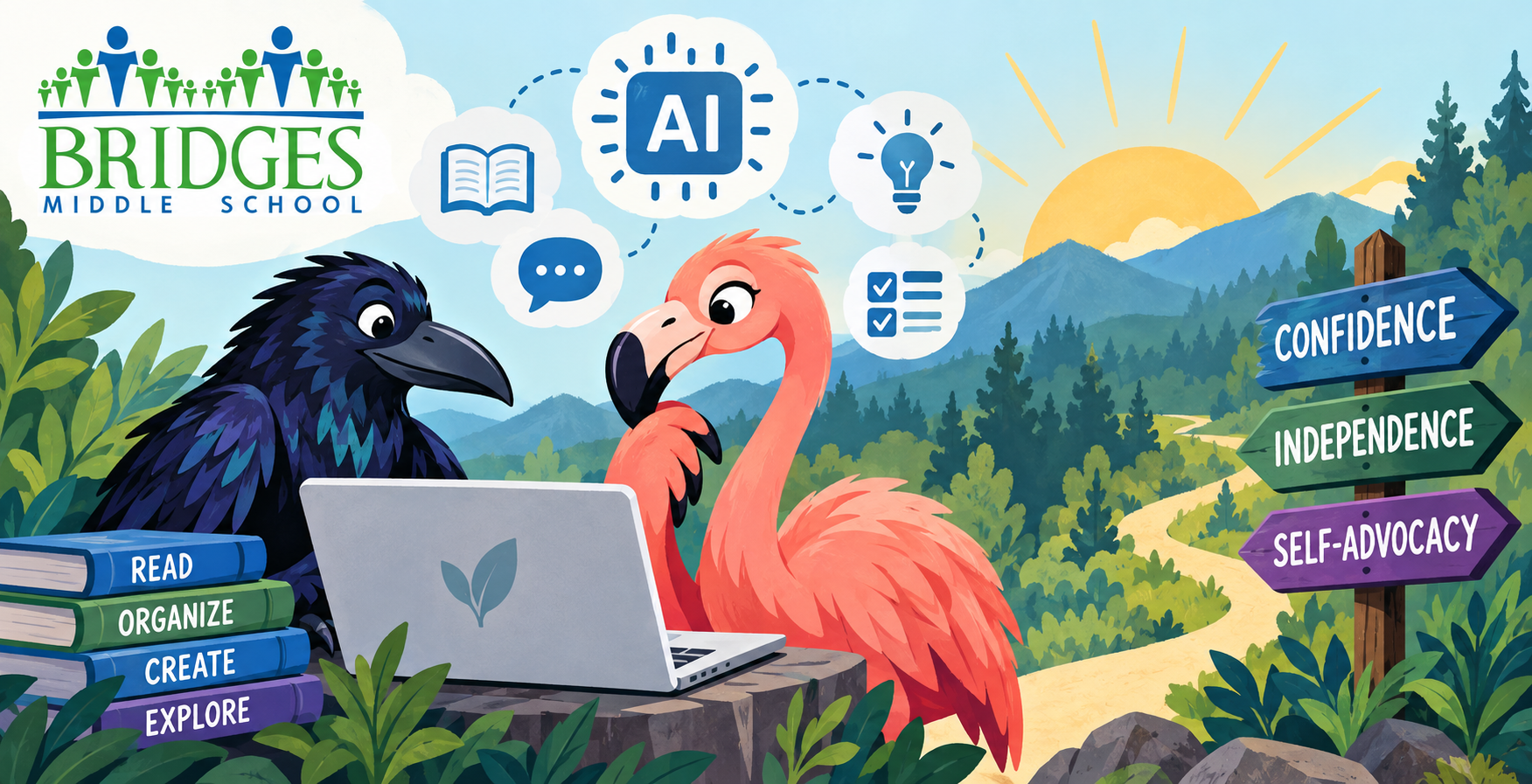
At Bridges, that distinction connects directly to our emphasis on building confidence, independence, and self-advocacy. Support matters, but so does knowing when to gradually step back.
As Beven writes:
“The oldest idea in good teaching is the scaffold, a temporary support you put around a skill while it is forming and then take away on purpose as the student gets stronger. A scaffold that never comes down stops being a scaffold and becomes a permanent part of the building.”
Her article looks at the growing role of AI and assistive technology in education and challenges educators and technology developers to think beyond completing tasks or saving time. The bigger question is whether the tools we give students ultimately help them become more capable and independent.
If this topic interests you, read Beven’s full article on TechFinitive here.